
In the fast-moving world of financial markets, timing can make the difference between success and missed opportunity. This is where buy and sell indicators come into play. These tools help traders and investors determine optimal entry and exit points by analyzing trends, patterns, and momentum. At Market Nexus Edge, we emphasize data-driven trading strategies, and in this blog, we’ll explore how these indicators can support smarter decisions.
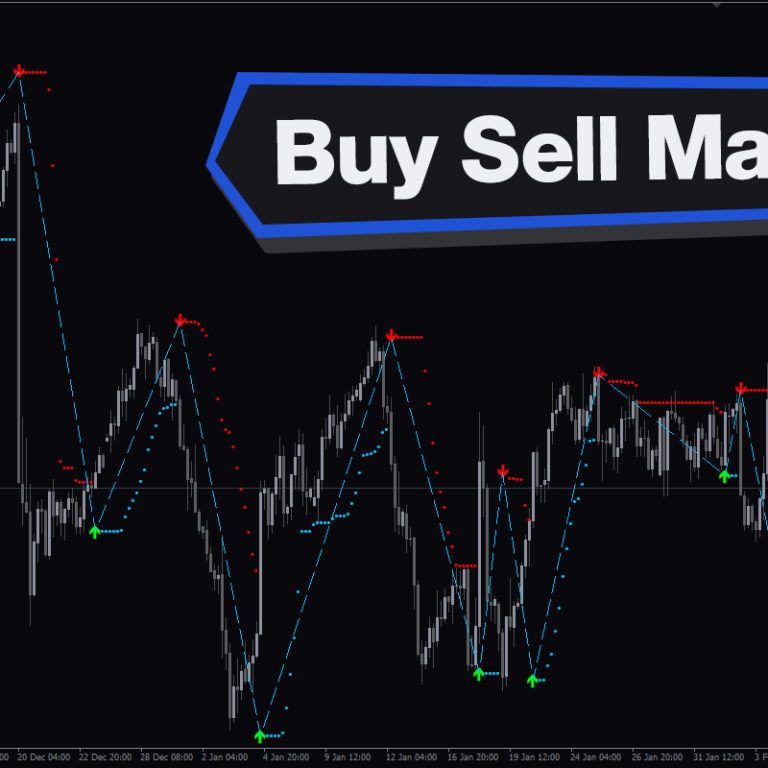
Buy and sell indicators are technical tools or signals derived from historical price and volume data that help traders identify potential market entry and exit points. They are widely used in forex, commodity, and equity markets, and play a critical role in both short-term trading and long-term investing strategies.
These indicators do not predict the future with certainty but highlight probabilities based on past market behavior. Used correctly, they can help reduce guesswork and improve trade execution.
Moving averages smooth out price data to identify the trend direction. Common types include:
Simple Moving Average (SMA)
Exponential Moving Average (EMA)
A crossover between short-term and long-term MAs can signal buy or sell opportunities. For instance, when a 50-day MA crosses above a 200-day MA (known as a Golden Cross), it may indicate a bullish trend.
The RSI measures the speed and change of price movements. It’s plotted on a scale of 0 to 100:
Above 70 – Overbought (potential sell signal)
Below 30 – Oversold (potential buy signal)
At Market Nexus Edge, we often use RSI in combination with other indicators for better validation.
MACD shows the relationship between two moving averages of a security’s price. It’s great for spotting momentum changes.
MACD Line: Difference between the 12-day and 26-day EMA
Signal Line: 9-day EMA of the MACD line
A MACD crossover (MACD line crossing above signal line) can be interpreted as a buy signal and vice versa.
These bands consist of a moving average with upper and lower bands set at standard deviations. When the price hits the lower band, it may be undervalued (buy opportunity); when it touches the upper band, it could be overvalued (sell opportunity).
This compares a particular closing price of a security to a range of its prices over a certain period. Like RSI, it indicates overbought or oversold conditions and is often used to confirm reversals.
Relying on a single indicator can lead to false signals. At Market Nexus Edge, we recommend combining multiple tools to validate your trading decisions. For example:
Use RSI and MACD together to confirm bullish momentum
Combine Moving Averages and Stochastic Oscillator for trend and entry point identification
Look for chart patterns (like head & shoulders or triangles) supported by indicator signals
This multi-layered approach reduces risk and increases the probability of well-timed trades.
In currency trading, indicators help navigate volatility. Pairing indicators like RSI and Bollinger Bands on major currency pairs (EUR/USD, GBP/USD) can reveal strong opportunities. Economic news releases often increase volatility, so combining fundamental and technical insights is crucial.
In markets like gold and crude oil, technical indicators help monitor momentum shifts during news events or geopolitical disruptions. Buy signals are often generated after retracements to moving averages, while sell signals appear at overbought levels.
Overreliance on One Indicator: No single tool is perfect.
Ignoring Market Context: Indicators should complement market trends, not contradict them.
Lack of Backtesting: Always test indicators with historical data.
Chasing Signals: Patience and discipline are crucial.
At Market Nexus Edge, our trading strategies incorporate:
Real-time technical signals
Customized buy/sell indicator alerts
Detailed market trend analysis
Educational content to help traders understand and apply indicators effectively
Whether you’re trading forex, commodities, or stocks, our team is dedicated to helping you build the skills and confidence needed to use these tools wisely.
Buy and sell indicators are powerful allies in your trading journey, offering insight into potential market turns and helping you refine your entry and exit strategies. However, they’re best used with context, discipline, and proper risk management.
At Market Nexus Edge, we provide you with actionable intelligence, blending indicator insights with expert market analysis. Stay ahead of the curve—leverage the power of indicators to trade smarter, not harder.